

HDPE
Stiff, slightly opaque and crinkly. Strong even when thin, so it is the most economical. Common for carrier bags, retail bags, nursery polybags and dry goods.
Bandar Lampung · Est. 1987
Customer Service
Not sure how plastic types differ? Want to work out your cost per sheet? Or make packaging in your own size and design? This page walks you through all of it.
The Basics
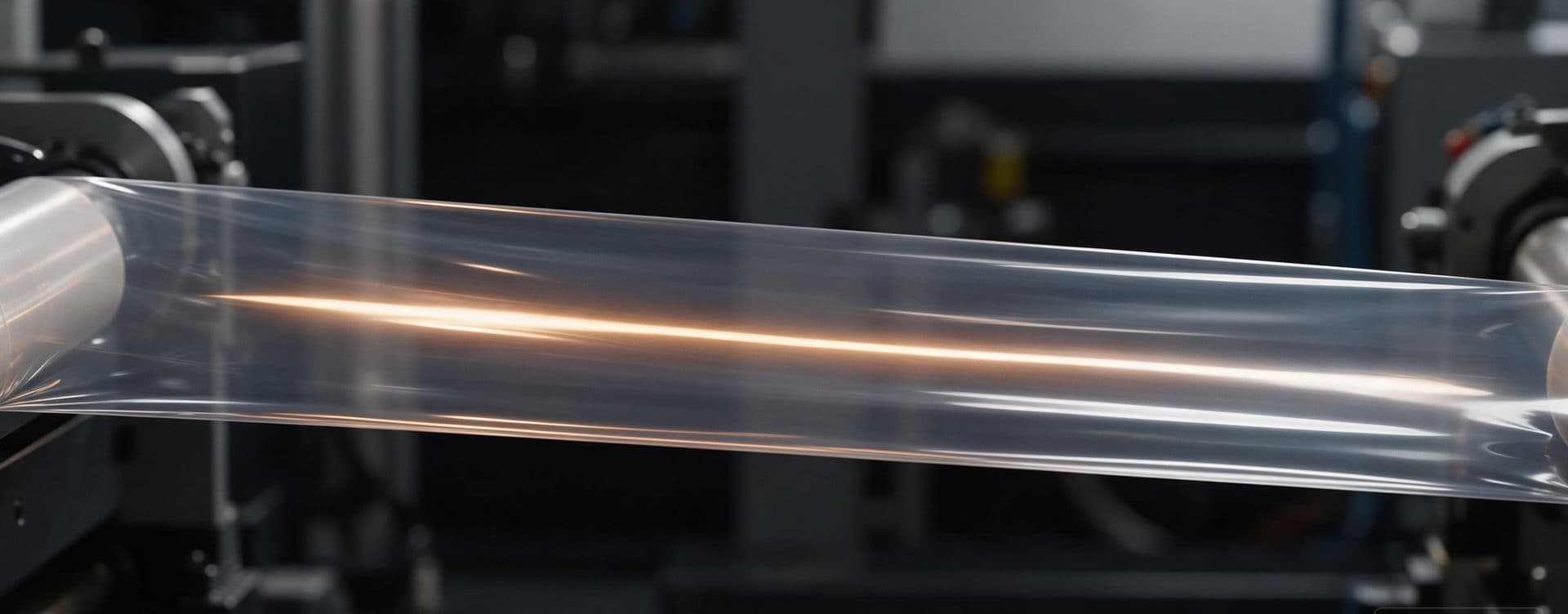
Plastic packaging starts as resin pellets that are melted, then blown or drawn into a thin film. That film is cut and sealed into bags, sacks or rolls.
Though they look alike, each resin behaves differently. Some are strong but stiff, some stay flexible in the cold, others are clear so the product shows through. Picking the right one makes your packaging both durable and economical.
Many buyers judge packaging by thickness alone. Yet a thin film from the right resin can outperform a thick one made from recycled blends. What matters is strength in real use, not the number on the spec sheet.
Plastic Types
Still unsure? Send us a sample of your product and we will help you choose, free of charge.
Stiff, slightly opaque and crinkly. Strong even when thin, so it is the most economical. Common for carrier bags, retail bags, nursery polybags and dry goods.
Flexible, puncture-resistant and soft even when cold. Used for ice bags, agricultural mulch, pallet wrap and hatchery bags.
Glossy and clear with a decent moisture barrier. Used for crackers, chips, bakery and salt, keeping products visible and crisp.
PE with additives designed to break down faster. Suited to brands, hotels and institutions reducing plastic waste.
Calculator
Enter your bag size and gauge. The calculator works out the weight per sheet and how many sheets you get per kilogram. Add your price per kilo and the cost per sheet appears straight away.
The formula used
The 2 accounts for a bag having two layers. Density: HDPE 0.95 · LLDPE 0.92 · PP 0.905 g/cm³.
Want to know which is genuinely cheaper? Compare two specifications side by side.
These are estimates. Real weight can vary slightly with material blend and machine tolerance.
Request a Quote For ThisWhat We Can Make
You do not have to settle for standard sizes. Many of our customers save money once the size is matched to their product.
Width, length and gauge made to suit your product. Send a sample or your current size and we will work out the best fit so no material is wasted.
Up to six-colour printing on any of our packaging. Have your own design? Send the file. Do not have one yet? Our team will help prepare it for print.
Need packaging that does not exist yet? We regularly develop it together with customers, from sample trials to locking the specification for future orders.
Partnership Programme
We welcome distributors, agents and shops who would like to market Trigunung products in their area. The process is simple.
We keep these terms simple for one reason: so the partnership is comfortable for both sides and lasts.
Partner Benefits
Pricing that leaves you a fair margin, with a clear structure that is not changed unilaterally midway.
Your agreed area is recorded and protected, so you are not undercut by another Trigunung partner in the same place.
One steady contact, help preparing print artwork, samples for your own prospects, and a delivery schedule you can rely on.
Customer Questions
Of course. For standard unprinted products you may order from sack-scale quantities. We are glad to grow alongside smaller businesses.
Typically from 50 kg per design, because a printing cylinder must be made first. We keep the cylinder, so repeat orders do not pay that setup again.
Yes, and we recommend it. We send samples so you can try them in daily use and feel confident before ordering in volume.
Send us the packaging you use now along with the fill weight. We check the gauge and material, then advise whether it can be trimmed or should be strengthened.
Resin prices do move with the market. What we protect is transparency: if an adjustment is needed we tell you beforehand and explain why, rather than quietly changing the specification.
Get In Touch
Please tell us your needs or questions. Our team will gladly reply within one business day, with no obligation to order.